A dead battery, flat tire, empty fuel tank, or locked vehicle does not always mean you need a tow truck.
Roadside assistance is intended for problems that may be resolved where the vehicle is parked or stranded. If the issue can be handled safely on site, you may be able to continue driving without having the vehicle transported anywhere.
Towing becomes the better option when the problem cannot be resolved at the roadside or the vehicle is not safe to drive.
Knowing the difference can help you describe the problem clearly when you call and make it easier for dispatch to determine what type of service you need.
What Is the Difference Between Roadside Assistance and Towing?
Roadside assistance focuses on resolving a specific problem at the vehicle’s location.
Common examples include:
- boosting a depleted battery;
- helping with a vehicle lockout;
- delivering fuel;
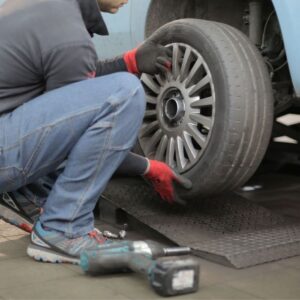
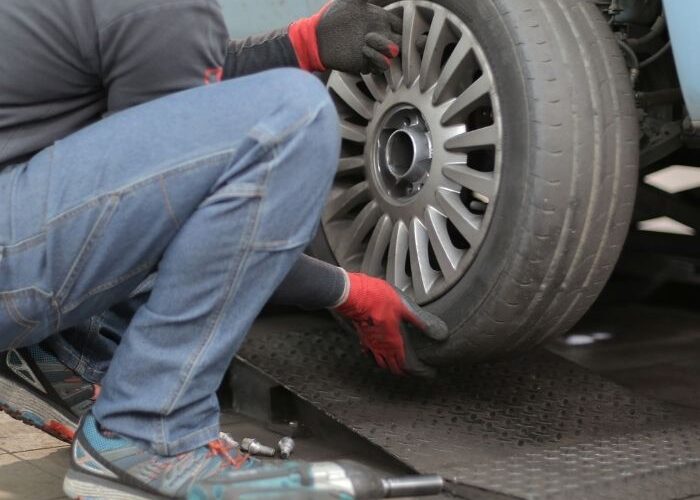
- changing a tire when the vehicle and available spare allow it.
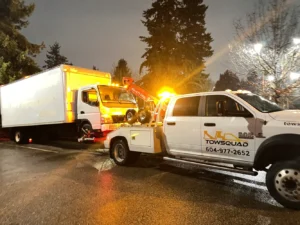
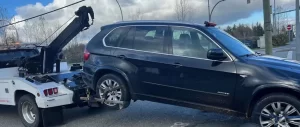
A towing service moves the vehicle from its current location to another destination, such as a repair shop, dealership, residence, or other agreed location.
The important question is therefore not simply, “Will my car start?”
It is:
“Can this problem be resolved safely where the vehicle is, and will the vehicle be safe to drive afterward?”
A Dead Battery May Only Need a Battery Boost
If you turn the key or press the start button and the vehicle will not start, a depleted battery is one possible cause.
A battery boost may be enough to get the vehicle running again when the battery has lost its charge. This can happen after lights or accessories have been left on, after a period of inactivity, or during conditions that place additional demand on the battery.
However, a boost does not solve every no-start problem.
If the vehicle will not start after the boost, will not remain running, or there are signs of another electrical or mechanical problem, transporting the vehicle for further diagnosis may be more appropriate.
Roadside assistance can address the immediate battery issue. It should not be treated as a substitute for mechanical diagnosis when the underlying problem remains.
A Flat Tire Does Not Always Require a Tow
A flat tire may be handled on site when the vehicle has a usable spare and the wheel, tire, and surrounding components allow a safe tire change.
The situation changes when there is more than a simple flat.
For example, towing may be necessary when:
- there is no usable spare tire;
- the wheel itself is damaged;
- more than one tire is damaged;
- collision or suspension damage affects the wheel;
- the vehicle is positioned somewhere where a roadside tire change cannot be performed safely.
The condition and location of the vehicle matter as much as the flat tire itself.
If you are unsure, describe the tire and wheel damage when you call rather than assuming that a tire change or tow is required.
Locked Out of the Car? You Probably Do Not Need a Tow
A vehicle lockout is a roadside-assistance problem rather than a towing problem in most circumstances.
If the vehicle is otherwise operational and the issue is simply that the keys are locked inside, the goal is to regain access to the vehicle rather than transport it somewhere else.
TowSquad provides car lockout assistance for situations such as keys locked inside the cabin or trunk and other vehicle-access problems.
Once access is restored, the vehicle can usually remain where it is or be driven normally, assuming there is no separate mechanical issue.
Running Out of Fuel Is Usually a Roadside-Assistance Call
Running out of gasoline or diesel does not normally require the vehicle to be towed simply because the tank is empty.
Fuel delivery allows a limited amount of fuel to be brought to the vehicle so it can be restarted and driven to a fuel station.
However, if the vehicle still does not start after fuel has been added, another problem may be responsible. At that point, towing may become necessary.
This is another example of why it helps to explain exactly what happened when you call. A vehicle that stopped because the fuel gauge reached empty presents a different situation from a vehicle that suddenly lost power while the tank still contained fuel.
When Is Towing the Better Choice?
Roadside assistance works best when there is a specific problem that can reasonably be addressed at the vehicle’s location.
A tow is more appropriate when the vehicle cannot be made safe to drive.
Common examples include:
The Vehicle Still Will Not Start
If a battery boost does not resolve the problem, the cause may require mechanical or electrical diagnosis that cannot be completed as a roadside service.
The vehicle can then be transported to a repair facility or another appropriate destination.
There Is Collision Damage
A vehicle involved in a collision may have damage that is not limited to what is visible on the body.
Problems involving the wheels, steering, suspension, lights, or other components can make driving unsafe.
If the vehicle cannot be driven safely after a collision, towing or vehicle recovery is the appropriate next step.
The Vehicle Cannot Roll or Steer Normally
Locked wheels, steering damage, drivetrain problems, or a vehicle that cannot enter neutral can affect how it needs to be moved.
These details should be provided when arranging the service because they can affect the loading and transport method.
The Vehicle Is Stuck in a Difficult Position
A vehicle in a ditch, mud, snow, against a curb, or another difficult position may require recovery before it can be transported.
This is different from a simple roadside problem such as an empty fuel tank or locked door.
Continuing to Drive Could Cause More Damage
Sometimes a vehicle still moves but should not continue being driven.
If there is significant mechanical trouble, collision damage, severe wheel or tire damage, or another condition that makes continued driving questionable, arranging a tow can avoid relying on the vehicle to complete the trip under its own power.
Can Roadside Assistance Turn Into a Tow?
Yes.
You do not necessarily have to determine the exact service before making the call.
Start by explaining what happened and what the vehicle is doing now.
For example:
- Does the engine start?
- Does the vehicle roll and steer?
- Is there visible collision or wheel damage?
- Is a warning light showing?
- Is the vehicle locked?
- Is the fuel tank empty?
- Is there a usable spare tire?
- Is the vehicle in a parkade, on a roadside shoulder, or in another restricted location?
Those details help dispatch determine whether roadside assistance is likely to address the problem or whether towing equipment should be arranged.
If roadside assistance is attempted but the vehicle still cannot be driven safely, towing can become the next step.
Roadside Assistance or Tow? A Simple Way to Think About It
If the problem is something that can potentially be resolved where the vehicle is, start with roadside assistance.
A battery boost, lockout service, fuel delivery, or tire change may allow the vehicle to continue without being transported.
If the problem affects the vehicle’s ability to start, move, steer, stop, or be driven safely after roadside help, towing is usually the more appropriate option.
You do not need to diagnose the vehicle yourself before calling.
Describe the symptoms, vehicle condition, location, and anything that happened immediately before the problem started.
What Information Should You Provide When You Call?
Having a few details ready can make it easier to determine what service is appropriate.
Provide:
- your exact location;
- vehicle make and model;
- a short description of the problem;
- whether the vehicle starts;
- whether it rolls and steers normally;
- visible tire, wheel, or collision damage;
- any access restrictions, such as an underground parkade;
- and the destination if you already know the vehicle will need to be towed.
If you are not sure whether you need roadside assistance or towing, say so. The important part is describing the condition of the vehicle accurately.
Need Roadside Assistance or Towing?
TowSquad provides roadside assistance for battery boosts, vehicle lockouts, fuel delivery, and mobile tire service, along with towing when a vehicle cannot be returned to the road safely.
Call 604.977.2652 and provide your location, vehicle details, and a short description of the problem. Dispatch can determine whether roadside assistance or towing is the appropriate next step.