When your vehicle breaks down, one of the first questions that may come up is how it will be towed. Not all towing methods are the same, and the equipment used can affect the safety of your vehicle during transport.
Two of the most common methods are flatbed towing and wheel-lift towing. Each approach has advantages, but if your main concern is protecting your vehicle from damage, the choice matters.
In this guide, we explain the key differences between flatbed and wheel-lift towing, how each method works, and which towing option is safest for your vehicle.
What Is Flatbed Towing?
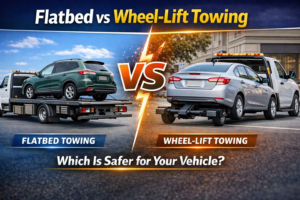
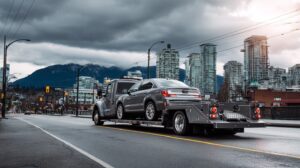
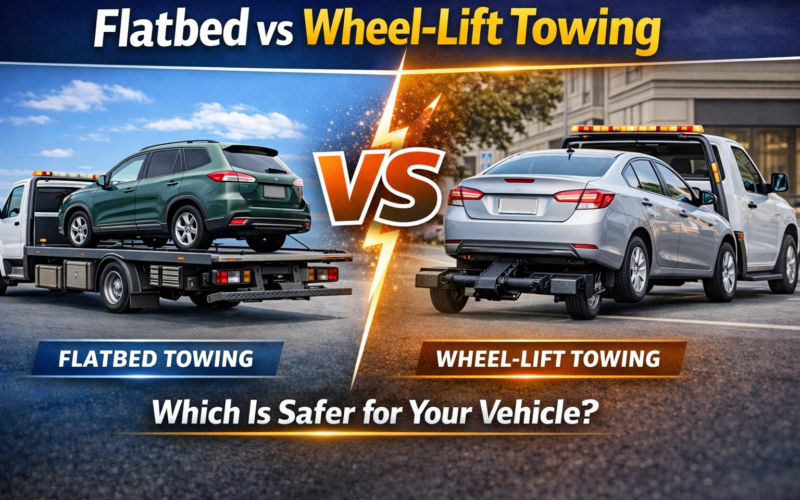
Flatbed towing uses a truck equipped with a long hydraulic platform that tilts and slides toward the ground. The vehicle is either driven or winched onto the platform and then secured before transport.
Because the entire vehicle sits on the truck bed, none of the wheels touch the road during transport.
Flatbed towing is commonly used for:
Luxury or high-end vehicles
All-wheel-drive vehicles
Vehicles with major damage
Long-distance transport
Motorcycles or specialty vehicles
This method is often considered the safest and most secure towing option, especially for modern vehicles with sensitive drivetrains.
If your car needs full protection during transport, professional flatbed towing services are typically the best choice.
What Is Wheel-Lift Towing?
Wheel-lift towing uses a metal yoke that lifts either the front or rear wheels of the vehicle off the ground. The other set of wheels remains on the road while the vehicle is pulled behind the tow truck.
This method evolved from traditional hook-and-chain towing but uses more advanced equipment that reduces the risk of damage.
Wheel-lift towing is commonly used for:
Short-distance towing
Parking enforcement or private property towing
Vehicles that are still drivable but need transport
Tight urban areas where maneuverability is limited
Because wheel-lift trucks are smaller and faster to deploy, they are frequently used for light-duty towing situations.
You can learn more about these services through light-duty towing when vehicles need quick and efficient transport.
Flatbed vs Wheel-Lift Towing: Key Differences
Vehicle Contact With the Road
Flatbed towing
Vehicle is completely off the ground
No tire or drivetrain movement
Wheel-lift towing
Two wheels remain on the road
Tires and drivetrain components may rotate
For vehicles with all-wheel drive or low ground clearance, flatbed towing is usually safer.
Risk of Vehicle Damage
Flatbed towing offers the lowest risk because:
The vehicle is fully supported
Suspension components are not stressed
There is minimal risk of scraping or drivetrain wear
Wheel-lift towing is still safe when performed by trained operators but may not be ideal for:
AWD vehicles
Severely damaged vehicles
Exotic or luxury cars
Transport Distance
Flatbed trucks are often preferred for long-distance towing because the vehicle remains stationary on the platform.
Wheel-lift towing is typically used for shorter distances, such as moving a vehicle from a roadside location to a nearby repair shop.
For extended vehicle transport, long-distance towing is usually performed using flatbed trucks.
Vehicle Types Supported
Flatbed towing works best for:
AWD vehicles
Electric vehicles
Lowered vehicles
Damaged cars after accidents
Motorcycles or specialty equipment
Wheel-lift towing works well for:
Standard front-wheel-drive vehicles
Short-distance relocations
Parking lot or roadside removal
Which Towing Method Is Safer?
In most situations, flatbed towing is considered the safest method because the vehicle is completely lifted off the road.
This reduces:
Tire wear
Transmission strain
Risk of scraping or suspension damage
However, wheel-lift towing is still a safe and efficient option when used correctly and when the vehicle type allows it.
Professional towing companies determine the best towing method based on the vehicle, location, and condition.
When Flatbed Towing Is the Better Choice
Flatbed towing is strongly recommended when:
Your vehicle has all-wheel drive
The car has major accident damage
The vehicle has very low ground clearance
You are transporting a luxury or specialty vehicle
The tow distance is long
Because the vehicle is fully secured, flatbed towing offers the highest level of protection during transport.
When Wheel-Lift Towing Makes Sense
Wheel-lift towing is often used when:
The tow distance is short
Space is limited (parking garages or tight streets)
The vehicle is front-wheel drive
Quick roadside transport is needed
This method is commonly used in urban environments and can be faster and more cost-effective in certain situations.
Choosing the Right Towing Service
If you are unsure which towing method your vehicle requires, a professional towing operator can recommend the safest option.
Tow trucks today are designed to handle a wide variety of vehicles safely, and experienced operators will select the proper equipment based on:
Vehicle type
Drivetrain configuration
Road conditions
Transport distance
For drivers dealing with a breakdown or roadside emergency, professional roadside assistance can also help determine whether towing is needed.
Final Thoughts
Both flatbed and wheel-lift towing are widely used in the towing industry, but they serve different purposes.
Flatbed towing offers the highest level of protection and is ideal for modern vehicles, long-distance transport, and situations where preventing damage is critical.
Wheel-lift towing, on the other hand, is efficient for short-distance transport and quick roadside situations.
The most important factor is choosing a professional towing company that uses the right equipment for your vehicle.
When done correctly, both methods can transport your vehicle safely to its destination.